
Scottish Astronomy & Celestial Events Calendar 2027
Updated for 2027
Scotland’s dark skies provide some fantastic opportunities to experience the night sky, from meteor showers and full moons to eclipses, planets, the changing seasons and, when conditions are right, the Northern Lights.
We’ve created this Scottish Astronomy & Celestial Events Calendar to highlight some of the main astronomical events and annual sky-watching opportunities to look out for throughout 2027.
Rather than listing every minor astronomical event, the calendar focuses on the main events that are particularly interesting for people visiting or exploring Scotland, including the Moon’s phases, major meteor showers, eclipses, equinoxes, solstices and notable planetary events.
The dates below are intended as a yearly guide for planning. Actual viewing conditions will depend on location, darkness, cloud cover and, for events such as the Northern Lights, solar activity.

Full Year 2027 Calendar, Astronomy & Celestial Events in Scotland
Updated for 2027
JANUARY
New Moon — 7th of January 2027
Full Moon — 22nd of January 2027
Quadrantid Meteor Shower — Peak around 3rd–4th of January 2027
One of the major annual meteor showers, with the 2027 peak occurring under relatively favourable Moon conditions. The Quadrantids are particularly well suited to northern-hemisphere observers.
*Potential Northern Lights*
FEBRUARY
New Moon — 6th of February 2027
Full Moon — 20th of February 2027
Jupiter at Opposition — 11th of February 2027
Jupiter reaches opposition, making it particularly well placed for observation during the night. Through binoculars, its four largest moons can also be seen.
Mars at Opposition — February 2027
Mars also reaches opposition during February, providing another notable planetary observing opportunity.
Penumbral Lunar Eclipse — 20th–21st of February 2027
A penumbral lunar eclipse will be visible from Scotland. In Glasgow, for example, the eclipse begins on the evening of 20 February and reaches maximum at 11:12pm.
*Potential Northern Lights*
MARCH
New Moon — 8th of March 2027
Full Moon — 22nd of March 2027
Spring Equinox — 20th of March 2027
The spring equinox marks the astronomical beginning of spring, when day and night are approximately equal in length. The nights then continue getting shorter as Scotland moves towards summer.
*Potential Northern Lights*
The darker nights of early spring can still provide opportunities for aurora watching, particularly further north.
APRIL
New Moon — 6th of April 2027
Full Moon — 20th of April 2027
Lyrid Meteor Shower — Peak around 22nd–23rd of April 2027
The Lyrids are one of the established annual meteor showers, although the bright Moon will make conditions less favourable around the 2027 peak.
April also marks the beginning of a much more useful period for exploring Scotland’s night skies as the nights remain dark but become noticeably shorter.
MAY
New Moon — 6th of May 2027
Full Moon — 20th of May 2027
Eta Aquariid Meteor Shower — Peak around 5th–6th of May 2027
The Eta Aquariids are an annual meteor shower associated with Halley’s Comet. They are generally more prominent from southern latitudes, but meteors can still be observed from Scotland. The International Meteor Organization identifies the 2027 peak as one of the year’s more favourable major shower opportunities.
JUNE
New Moon — 4th of June 2027
Full Moon — 19th of June 2027
Summer Solstice — 21st of June 2027
The summer solstice brings the longest day and shortest night of the year in Scotland.
For stargazers, this also means very limited darkness, particularly in northern Scotland. June is therefore a very different time for astronomy compared with the long winter nights.
JULY
New Moon — 4th of July 2027
Full Moon — 18th of July 2027
Southern Delta Aquariid Meteor Shower — Peak around 28th of July 2027
The Southern Delta Aquariids are an annual summer meteor shower, with activity extending through July and August.
Scotland’s nights remain relatively short at this time of year, so the best opportunities for meteor watching are limited to the darker hours around midnight and into the early morning.
AUGUST
New Moon — 2nd of August 2027
Partial Solar Eclipse — 2nd of August 2027
A major astronomical event of 2027. The eclipse is total somewhere in the world but appears as a partial solar eclipse from Scotland. It will be visible across Scotland, although the amount of the Sun covered varies by location.
Perseid Meteor Shower — Peak around 12th–13th of August 2027
The Perseids are one of the most popular annual meteor showers and are particularly well known in the northern hemisphere. However, the Moon will interfere with viewing around the 2027 peak, so darker periods later in the night may provide better opportunities.
Full Moon — 17th of August 2027
SEPTEMBER
New Moon — 1st of September 2027
Full Moon — 15th of September 2027
New Moon — 30th of September 2027
September is particularly useful for dark-sky trips because the nights are becoming substantially longer while outdoor conditions can still be relatively comfortable.
Autumn Equinox — 23rd of September 2027
The autumn equinox marks the astronomical beginning of autumn and the point after which nights continue to lengthen towards winter.
Neptune at Opposition — 28th of September 2027
Neptune reaches opposition during September, making it particularly well placed for telescope observation.
*Potential Northern Lights*
OCTOBER
New Moon — 29th of October 2027
Full Moon — 15th of October 2027
Saturn at Opposition — 18th of October 2027
Saturn reaches opposition during October, making it particularly well placed for observation. Its rings are a rewarding sight through a telescope.
Orionid Meteor Shower — Peak around 21st of October 2027
The Orionids are an annual meteor shower produced by debris from Halley’s Comet. They are one of the main meteor showers worth watching from Scotland during the autumn.
*Potential Northern Lights*
NOVEMBER
New Moon — 28th of November 2027
Full Moon — 14th of November 2027
Leonid Meteor Shower — Peak around 17th–18th of November 2027
The Leonids return each November and are associated with debris from Comet Tempel-Tuttle.
Uranus at Opposition — 30th of November 2027
Uranus reaches opposition at the end of November and can be a target for experienced observers with dark skies and suitable equipment.
*Potential Northern Lights*
DECEMBER
New Moon — 27th of December 2027
Full Moon — 13th of December 2027
Geminid Meteor Shower — Peak around 13th–14th of December 2027
The Geminids are one of the major annual meteor showers and normally provide good activity. In 2027, however, the bright Full Moon will make the peak more difficult to observe.
Winter Solstice — 22nd of December 2027
The winter solstice brings the shortest day and longest night of the year in Scotland, providing some of the greatest potential hours of darkness for stargazing.
Ursid Meteor Shower — Peak around 22nd–23rd of December 2027
The Ursids provide another opportunity for meteor watching towards the end of the year.
*Potential Northern Lights*
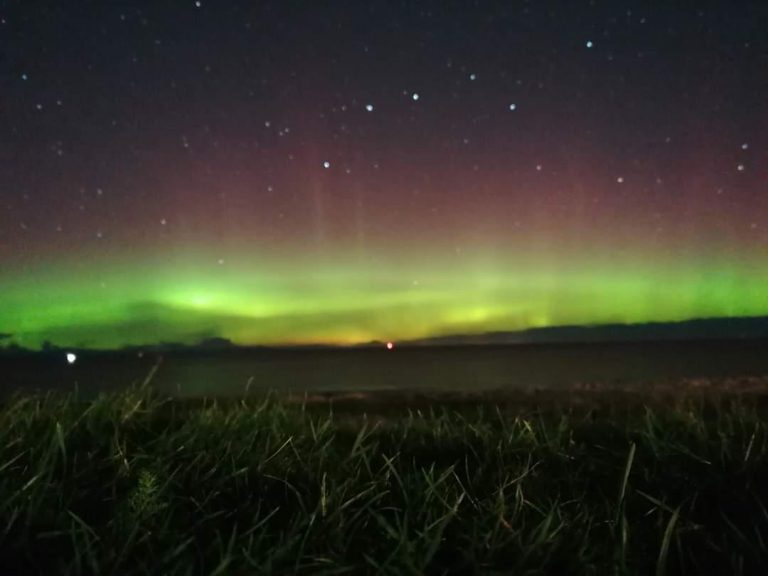
Northern Lights and Dark Skies in Scotland
Scotland is a fantastic place to experience the night sky. Away from towns and cities, there are many quiet locations with relatively low levels of light pollution, making it possible to see far more of the night sky than you might in an urban area.
Scotland is also home to several Dark Sky Parks and Dark Sky Places, offering particularly good conditions for stargazing. Whether you’re hoping to see the Milky Way, a meteor shower or, with the right conditions, the Northern Lights, travelling away from the brightest areas can make a big difference.
The Northern Lights, or aurora borealis, can sometimes be seen from Scotland during the darker months. Sightings are never guaranteed, as they depend on solar activity as well as darkness, clear skies and low levels of light pollution. Northern Scotland generally offers greater opportunities, although stronger displays can sometimes be visible much further south.
For anyone planning a trip around the night sky, the best locations don’t necessarily need to be major tourist attractions. A quiet campsite, remote coastal location or rural spot away from artificial light can provide an excellent opportunity to look upwards after dark.
How Can Scotlander Help?
If you’re travelling to Scotland specifically to explore the outdoors, watch the night sky or simply get away from the towns and cities, a campervan can give you the flexibility to build your trip around the places you want to visit.
Scotlander offers automatic campervan hire and outdoor equipment hire near Edinburgh, giving you the option to start your trip with the vehicle and equipment you need. For visitors travelling from elsewhere in the UK or overseas, our outdoor equipment hire can also mean you don’t have to bring bulky camping equipment with you.
Depending on your plans, you can hire equipment such as tents, sleeping bags, camping mats, hiking equipment, cooking equipment and other outdoor essentials, then head out from Edinburgh and explore Scotland at your own pace.
Whether you’re travelling for a particular astronomical event or simply looking for somewhere quiet to spend a few nights under the stars, Scotland has plenty of places to explore.
Check the calendar above, plan around the darker nights and start planning your Scottish adventure with Scotlander.